
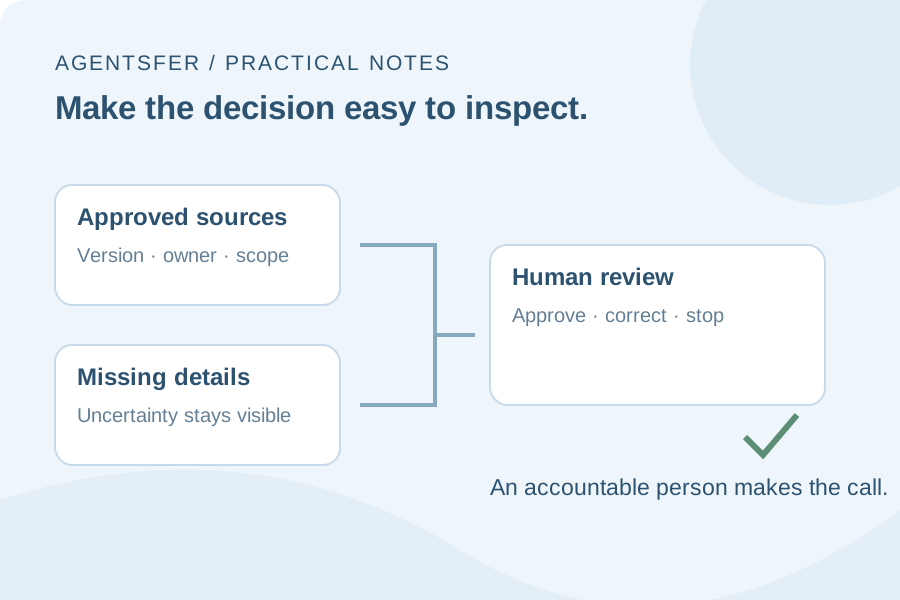
Decide what the system may prepare
An AI workflow can organize information, summarize approved records and draft a proposed next step. The boundary should describe what it may read, create or change.
Some actions can be prepared automatically. Others, such as sending a quote, changing a customer record or giving professional advice, may require explicit approval or remain outside the workflow.
Make review useful
A reviewer needs enough context to make a decision: source references, missing information, uncertainty and the action being proposed. A generic approve button is not a meaningful control.
Plan for exceptions
Set a clear path for ambiguous, sensitive or incomplete requests. The assistant should pause and route work to the right person when it reaches a boundary.
Show the difference that needs a decision
Imagine an invoice assistant comparing a purchase order, supplier invoice and receipt. A useful review screen puts the conflicting quantities beside their source records and explains what is missing. The accountant can correct the proposed classification, request a source check or stop the posting. A polished summary with no way to inspect the underlying records would be much harder to trust.
Keep the proposed action visible. Preparing a reconciliation, posting to a ledger and releasing a payment are different permissions. Approval of one should not silently authorize the others. This example describes a possible design, not an accounting recommendation or a live system connection.
Give the reviewer a real ability to stop
A review queue needs a responsible owner and a clear state. Pending, approved, corrected and rejected work should remain distinguishable. An action that needs approval must wait for that approval, including when a downstream tool retries a request or a staff member opens the task again.
Review also takes time. If every low-value event goes to the same person, the queue can become another source of repetitive work. Agree which tasks the assistant may prepare, which actions require a qualified decision and which situations should immediately route out of the automated path.
Keep a useful record without collecting everything
For consequential work, teams may need to know which source version was used, who approved the action and what happened afterwards. The record should support that purpose while excluding unnecessary sensitive content. Retention and access need to be agreed with the people responsible for the workflow.
Use controlled sample cases before live access. Include missing fields, stale sources, conflicting records and out-of-scope requests. A system that produces an honest handoff in those situations can be more useful than one that always produces an answer.
Start with a practical question.
Explore a preliminary assessment or talk through a business challenge.