
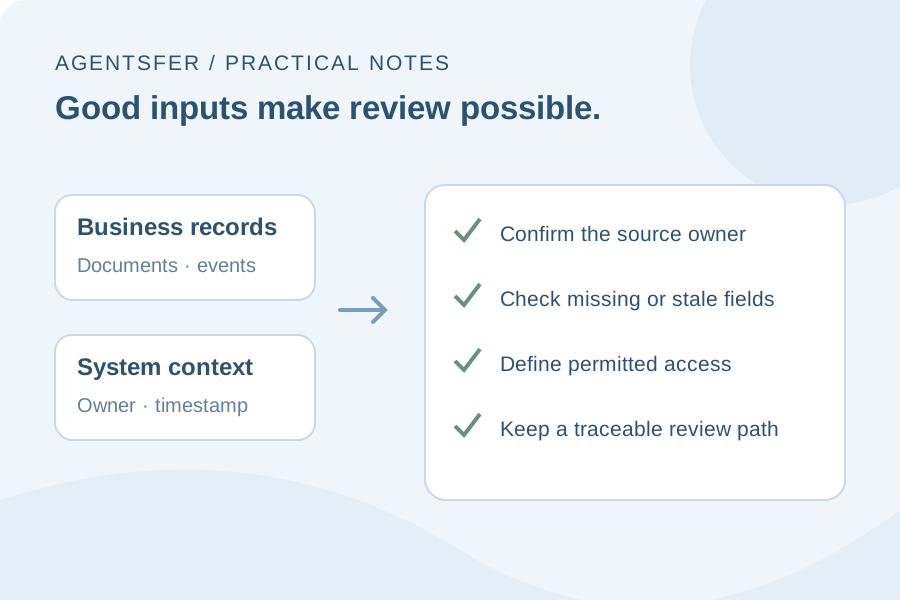
Name the source of truth
A workflow needs to know which system or document is authoritative for each field. If sources disagree, the process should expose the conflict for review.
Check access and quality
Review who can access the information, how current it is, how it is retained and which fields are actually needed. Limit a workflow to its approved purpose.
Test with representative examples
Use appropriately protected test cases to examine missing fields, unusual requests and conflicting information before expanding scope. People close to the work should review the outputs.
Make a small source inventory
Choose the records needed for one workflow and identify who owns them. For an order-status assistant, that may mean order identifiers, customer entitlements, status fields and approved response guidance. There is little benefit in connecting a large document library before the team knows which version of a record is authoritative.
Capture basic context: update frequency, missing fields, location, sensitivity and access rules. Distinguish an employee’s working spreadsheet from a validated operational source. If several records disagree, decide how that disagreement should appear to the reviewer.
Treat a missing answer as a useful outcome
A source can be present and still be unsuitable. A stock record from last week should not be presented as current availability. An unversioned procedure should not automatically override an approved current one. The assistant needs a way to report that it cannot verify the answer and route the request to the source owner.
Use sample questions that staff actually receive. Include incomplete identifiers, renamed products, duplicate customer records and information the caller is not entitled to see. These cases reveal whether the proposed retrieval and access boundary supports the real work.
Agree how improvements are maintained
Assign responsibility for correcting source errors and updating approved material. Where personal or sensitive information is involved, agree the purpose, minimum fields, retention period and authorized users before enabling access. A data-quality task should not become an excuse to collect everything.
Start with a small approved sample, document the gaps and decide which issues block useful output. Some improvements may belong in the source system rather than the AI layer. Keeping that distinction clear helps the team build a workflow that can be checked and maintained.
Start with a practical question.
Explore a preliminary assessment or talk through a business challenge.