
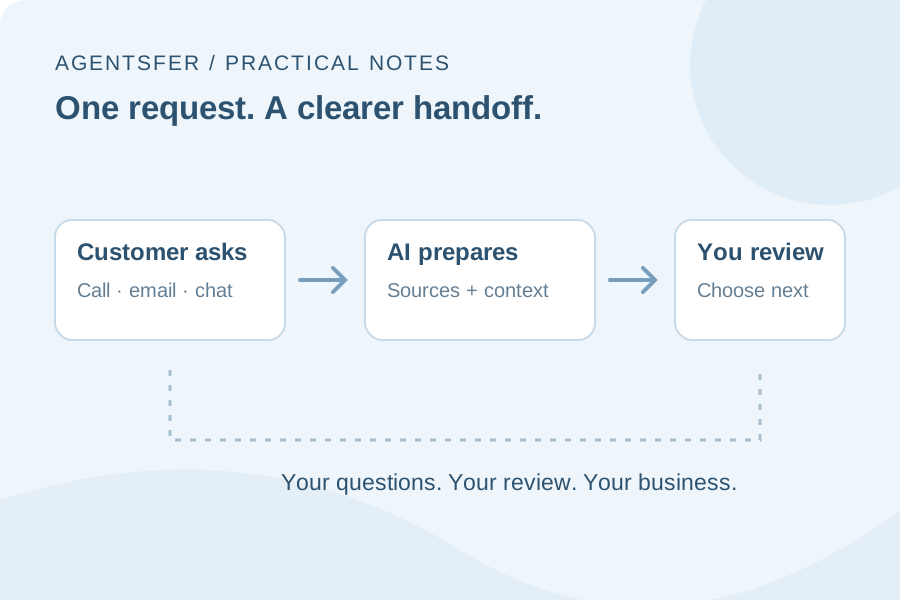
Start with a repeated task
Useful AI adoption often begins with a familiar task: collecting enquiry details, sorting a request, finding an approved answer or preparing a first draft.
The right starting point is specific enough to describe, frequent enough to matter and safe enough to review before anything consequential happens.
Give the assistant a narrow role
A customer enquiry assistant might ask a short set of questions, summarize the request and prepare a follow-up draft. The business still confirms availability, pricing and commitments.
Several focused agents can share a process, but each role needs an owner, a clear boundary and a defined handoff.
Measure the work, not the hype
Before changing a process, record how it works today: where requests arrive, how long routine steps take, where details are missed and who must approve the next action.
- Choose one workflow and one accountable owner.
- Use approved data and sources.
- Review sample outputs before connecting live systems.
- Compare the new workflow with the agreed baseline.
Follow one enquiry all the way through
Consider a plumber working under a sink when the phone rings. A useful assistant does not need to solve the repair. It can introduce itself, ask the approved intake questions and prepare a callback request with the issue, location and preferred timing. The owner can then decide how to respond without reconstructing the conversation from scattered notes.
The details matter. A preferred time is not an appointment. A price reference is not a quote for an unseen job. If a calendar or job-management tool is connected later, the workflow still needs rules for unavailable slots, incomplete records and requests that require a person. This is a design example rather than a claim about a live installation.
Choose the smallest useful system boundary
Begin by identifying the information needed for that task. Approved opening hours and service areas may be enough for a routine enquiry. Access to every customer record is unnecessary when the only output is a callback brief. A narrow starting point makes the review easier and exposes gaps before they affect a customer.
Connections should be assessed against the actual software in use. An available API, a supported account plan, reliable identifiers and sensible permissions are practical prerequisites. If those are missing, a prepared draft or manual handoff may still be a useful first step.
Plan for the day after launch
Someone needs to own the questions, review the outputs and update the approved source when the business changes. Decide how a caller reaches a person, what happens when a tool is unavailable and how staff report a wrong answer. These operating details are part of the workflow rather than a separate technical afterthought.
Compare the result with the original task: are requests more complete, are reviews easier, and are customers receiving accurate follow-up? Record exceptions as well as successful cases. Expand only when the evidence and the team’s capacity support the next change.
Start with a practical question.
Explore a preliminary assessment or talk through a business challenge.